A gas fireplace that sat idle is not the same one you shut off
Most gas fireplaces in Placentia are switched off sometime in spring and left alone until the first cold evening in late autumn. In a house you live in, that gap is a few months. In a second home or a rental between tenants it can be a year or more. Either way, the unit you light in November has spent the warm months gathering things that were not there when you turned it off.
This post covers what changes inside an idle gas fireplace, what our service visit does about it, what decides the price, and when a service turns into a repair.
What builds up while the pilot is off
Gas fireplaces are simple machines, and that is part of why owners leave them alone. Still, a few things go wrong during a long rest:
- Spiders and insects. Small burner ports and the pilot tube are the right size for webs and egg sacs. A blocked port gives an uneven flame or none at all.
- Dust on the logs and burner. Ceramic logs and embers collect dust that burns off with a smell, and sometimes leaves soot where the flame touches it.
- A weak flame sensor. The thermocouple or thermopile that proves the pilot is lit wears with age. After months off, a marginal one may stop holding the valve open.
- Film on the glass. The white haze from last season stays baked on. It thickens each year if it is not removed.
- Vent trouble. On units that vent through the roof or a wall, a bird or wasp can move into the vent cap over summer.
- Batteries. Remotes and some ignition modules run on batteries that go flat in a drawer.
In a house with someone living in it, half of these are noticed within a week. In a closed house, the first person to notice may be a guest who does not know what a normal flame looks like.
What our service visit covers
Our gas fireplace cleaning visit is built around getting a rested unit back into use safely. We:
- Shut the gas at the fireplace valve and take out the glass front.
- Lift out the logs and embers, brush them and set them back where the maker's layout puts them, because the wrong layout can make soot.
- Clear the burner ports and the pilot assembly.
- Clean the glass inside and out to remove the haze.
- Look at the vent cap from outside for nests and damage.
- Light the unit, watch the flame, test the safety shutoff and measure carbon monoxide near the opening.
- Note anything that will need a part.
You get a short written note of what we found and what we did, with photos of anything that needs a decision.
When it turns into a repair
Sometimes the pilot will not light, lights and drops out, or the main burner will not come on. That moves the job from service to gas fireplace repair. Usual causes in an idle unit are a worn flame sensor, a fouled pilot, a dead ignition module or a valve that has stuck. Older units can also have parts the maker no longer stocks.
We do not swap parts without telling you. If something needs replacing, you get the part, the reason and the price before we go ahead.
What decides the price
Gas fireplace service is not on our published price list, because units differ too much: a simple log set in an old masonry fireplace is a short visit, while a sealed direct vent unit with a fan, a remote and a long vent run takes longer. Three things set the figure: the type of unit, whether the glass front has to come off, and how long it has been since anyone opened it up.
If you can, find the brand and model on the plate inside the lower grille or on the manual. Then ask for a service price with the form at the top of this page and tell us the brand, whether it has glass doors or a sealed front, and roughly when it was last serviced. We give you the figure before the visit is booked.
When the fireplace is in a rental
Tenants rarely know how a gas fireplace should look when it is running. A pilot that has been flickering for weeks, a burner that leaves soot on the logs, a faint smell at start up: these often go unreported. For managers, we fold the gas check into a turnover visit, and our property manager page explains how each unit gets its own dated record. A house that also has a wood fireplace can have both done on the same trip.
Safety while it sits
If you smell gas when you open a closed house, do not light anything or flip switches. Walk out, and ring the gas company once you are standing outside. That is their call to make before ours. Once they have cleared the line, we can come and find out why.
It is also worth having working carbon monoxide alarms in any house with a gas fireplace, and testing them when you arrive for the season.
Ready before the first cold week
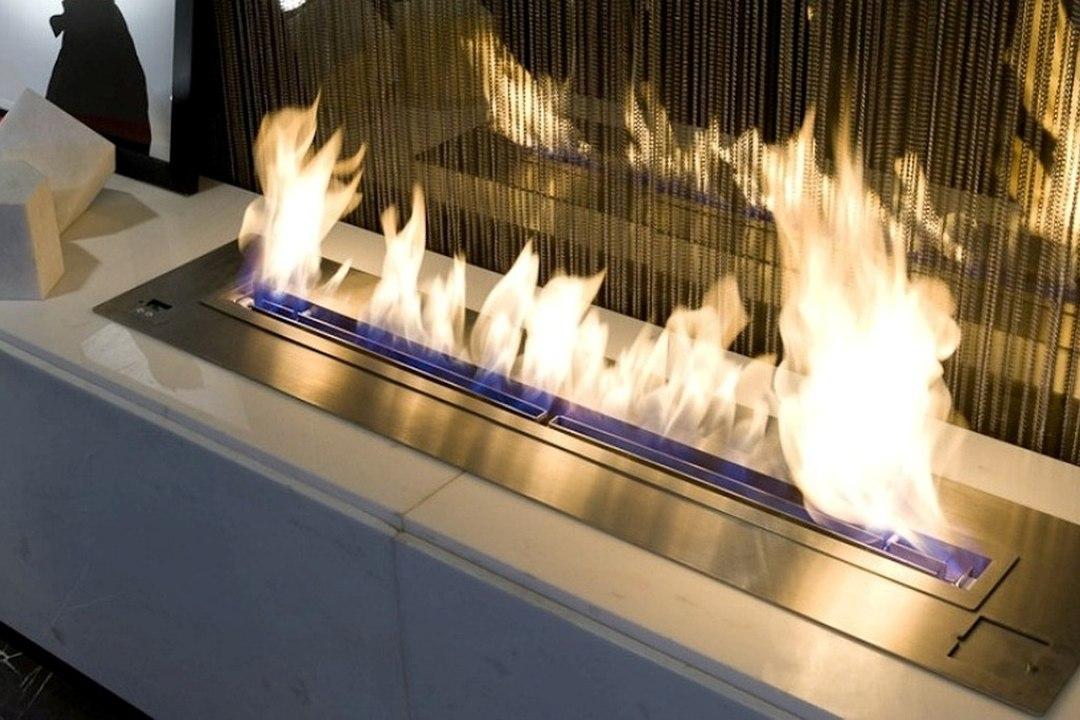
Once the unit has been serviced, the day you arrive is simple. Air the house out, press the test button on each alarm, then run the fireplace with the glass in place and stay in the room for the first few minutes. A steady flame with a blue base and yellow tips is what a healthy unit shows. A flame that lifts off the burner, flickers orange or leaves dark marks on the glass is a reason to switch it off at the valve and get in touch.
Book in early autumn and the unit will be ready before the first cold week, when everyone else calls at once. If your gas fireplace is in a Placentia house, or nearby in Orange, Anaheim or Tustin, start on the contact page and tell us how long it has been off.
Opening the House for the Season?
Blount Chimney Group works down a checklist from cap to firebox and emails it to the owner, a photo on each line. Owners book us from Placentia, Orange, Anaheim, Tustin and the rest of Orange County.